5 days agoShareSave
Maria Salvati
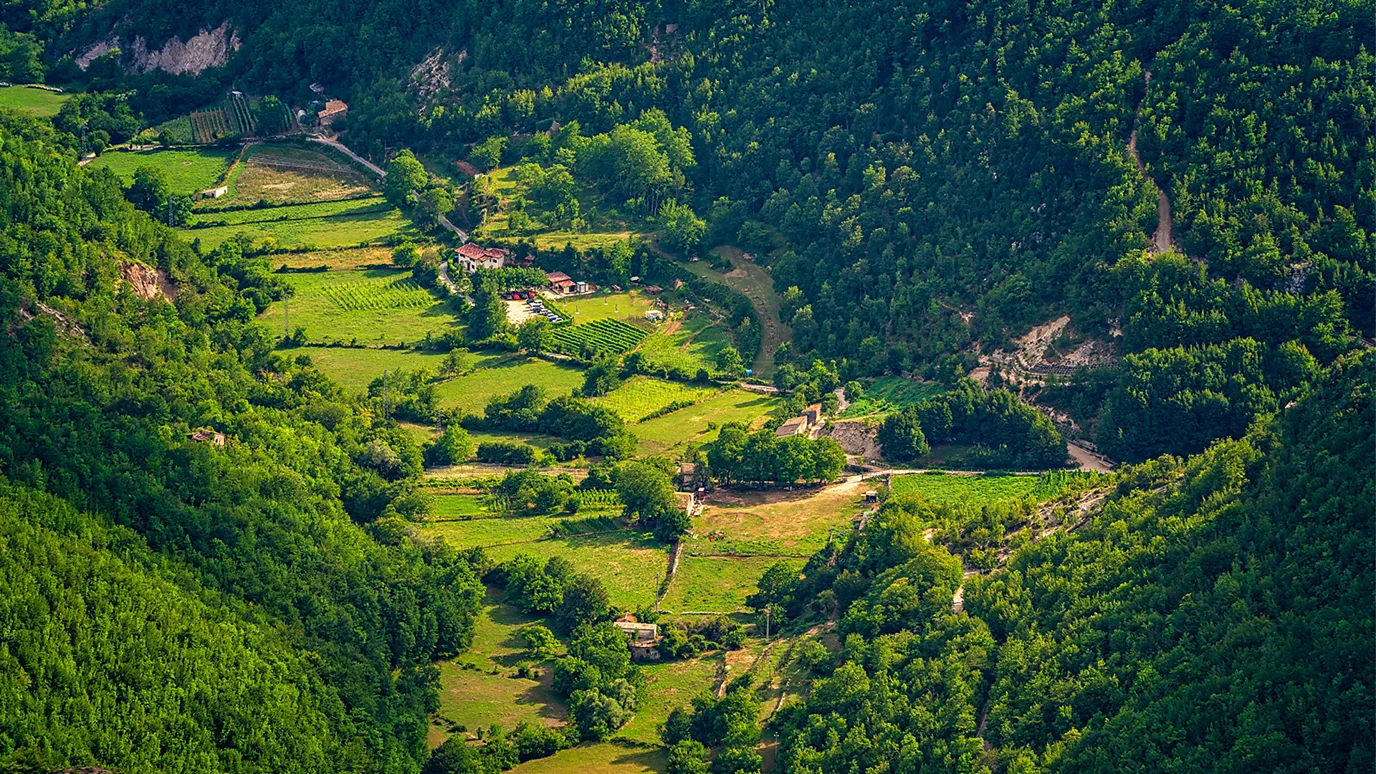
As Italy grapples with overtourism, a series of ancient trails resurrected by nuns winds through the forgotten landscapes where Benedictine monasticism shaped medieval Europe.
Under a pale autumn sky, I set out to meet my old friend, Sister Katherine Adams; a Franciscan nun who lives in the village of Vallepietra on the outskirts of Rome. She had invited me on the Cammino della Santissima Trinità, an ecclesiastical pilgrimage through the forested landscapes of Lazio and Abruzzo where Benedictine monasticism first emerged in the 6th Century.
The network of four walking trails spans 18km and winds past pivotal, yet largely untouristed, Catholic sites of worship. Since the pilgrimage launched three years ago, more than 10,000 devotees have plodded these paths, and as I grabbed a coffee-filled thermos, a rose-scented rosary and a map, I, too, embarked on Italy’s newest pilgrimage.
A sister act of love
Though these trails have existed for centuries, the santo cammino (holy trail) itself only came to life in September 2022, when Italy’s strict pandemic restrictions were finally easing. Just as the nation prepared to brace for a new onslaught of overtourism in its cities and at many of its iconic religious monuments, Adams and her fellow nuns mapped the trails to offer young people an adventurous way to avoid the crowds while exploring some of Italy’s lesser-known spiritual sites; rediscovering prayer and community along the way.
“Visitors rarely know what a sanctuary trail experience in Subiaco or Vallepietra means,” Adams told me. “When they land in Rome, it’s all about crumbling aqueducts, grand piazzas and Renaissance abbeys. But it’s right here that a wealth of sacred relics and challenging hiking experiences converge.”
Unlike other modern pilgrimages, apps can’t help you on this adventure. This network of trails is only partially signposted, forcing you to trust your instincts or locals who know the land by heart. Steep gorges require caution, reminding you to slow down. “People arrive exhausted by everyday life,” Adams told me. “But here, their gaze changes. Their approach becomes quieter. They start bonding with others while singing litanies.”
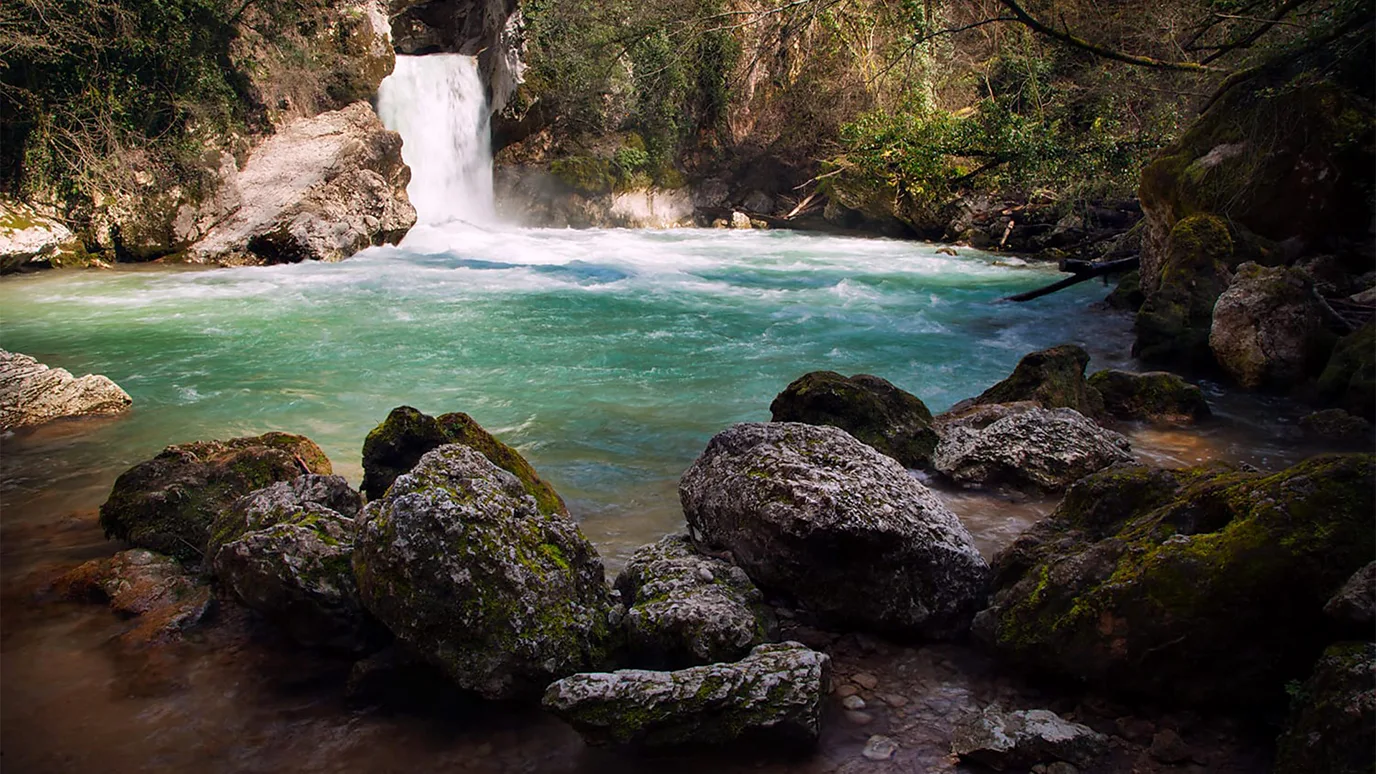
The lush Italian countryside surrounding Subiaco is the epicentre of Western monasticism (Credit: Maria Salvati)
The cradle of medieval Europe
Though the official starting point of the santo cammino is the Vallepietra Santissima Trinità – a sanctuary perched 1,373m high in the mountains – Adams suggested I begin my trek along the Cammino delle Abbazie, a moderately difficult 7km (4.3 miles) trail running from the town of Subiaco through the Monti Simbruini Regional Park to the Monte Cassino hilltop.
Plan your trip:
When to go: The Cammino della Santissima Trinità is open year-round but visit in late spring or early autumn for less crowds. Tackle the trails independently or by joining periodically-held tours run by local parishes and the Monti Simbruini Regional Park.
Getting there: From Rome, take the A24 highway to Subiaco or the “Roma-Subiaco” bus to Subiaco Piazza Falcone for the Cammino delle Abbazie and the Tourist Trail ST2. The SU19A bus to Vallepietra-Simbrivio leads to the Sentiero dei Pellegrini. Shuttles for Cappadocia are arranged via the local parish and depart from the car park above Santissima Trinità Sanctuary. It’s two hours from Rome to Subiaco, so leave before 08:00 to avoid traffic.
Stay: Near Santissima Trinità Sanctuary, the Agriturismo Colle Tocci offers rooms, a garden and a family-run trattoria; try the traditional strozzapreti pasta and the cherry tart. Book at least a month in advance.
I arrived in Subiaco at first light; mist still hanging over the valley as I passed a group of hikers singing pastoral songs, followed by the echo of blackbirds.
Leave a Reply